Humanoid Robotic Touch for Social Regulation of Emotion
Multimodal evidence for how humanoid touch can regulate emotion during media consumption.
Fu Guo, Chen Fang, Zenggen Ren, and Mingming Li
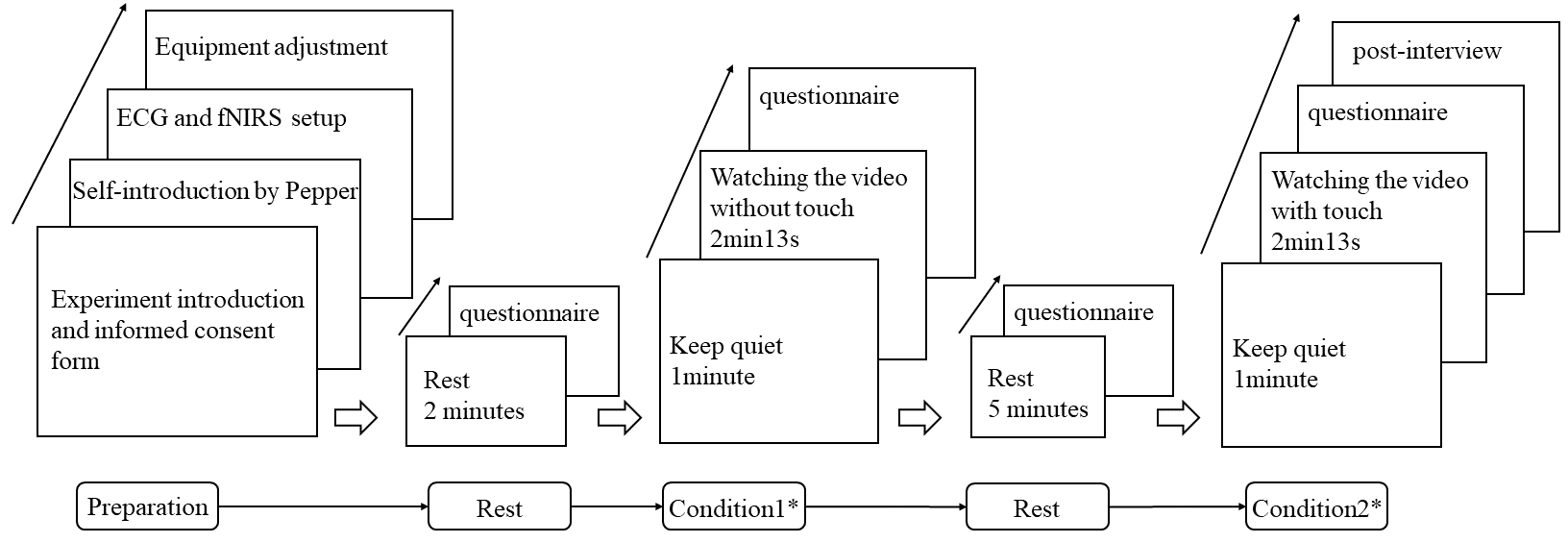
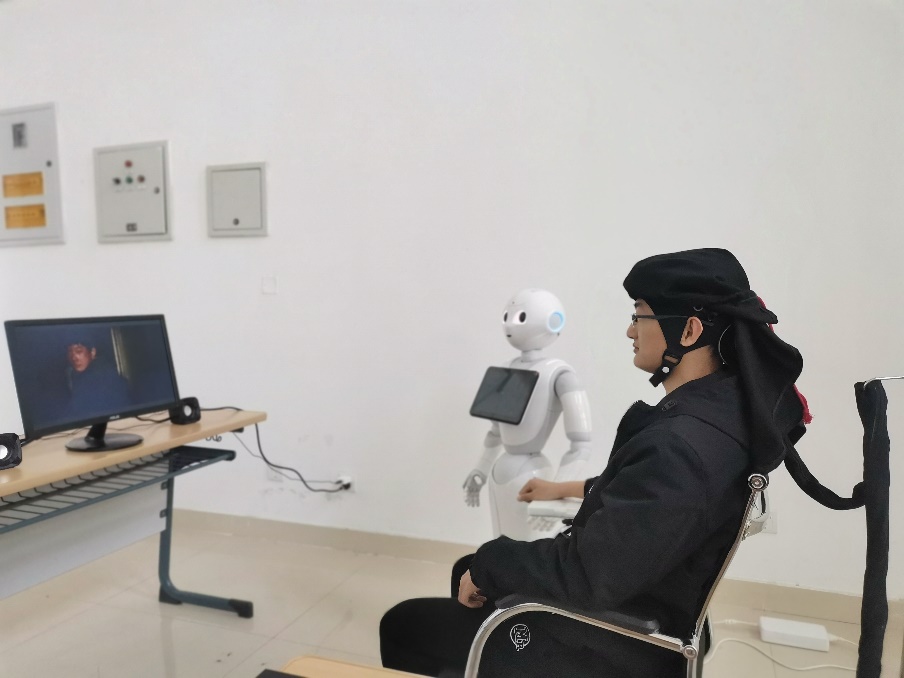
This project investigated whether humanoid robotic touch can help regulate users’ emotions during an affective experience. We designed a mixed experiment with touch type (grip versus contact) as a between-subjects factor and the presence of touch during movie viewing as a within-subjects factor.
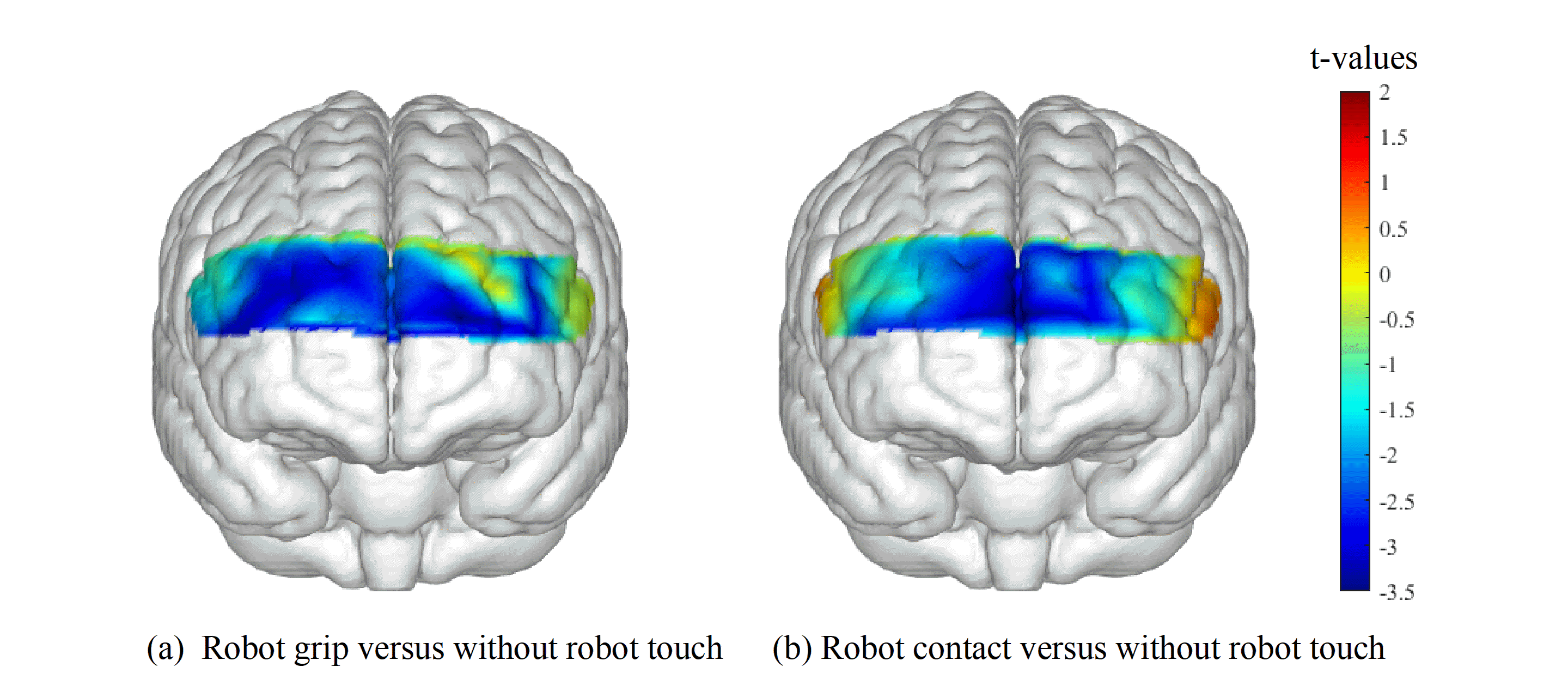
Subjective emotional ratings were analyzed together with ECG and fNIRS signals. The results showed that robot touch increased positive emotions, reduced heart rate, increased heart-rate variability, and helped suppress right DLPFC activity. In contrast, the main effect of touch type was limited.
The study provides subjective and neurophysiological evidence for the potential of humanoid robotics in emotion regulation and mental support scenarios. This work was published in Behaviour & Information Technology.